On community living, shared responsibility, and the ancient wisdom that makes «Stronger Together» more than a project title Published as part of the Erasmus+ KA210-ADU project «Stronger Together» — ABARKA & Zembul Women’s Cooperative
There is a proverb from across many African traditions, expressed in different languages but carrying the same essential truth: Umuntu ngumuntu ngabantu. In the Zulu rendering it is most widely known, and its translation, approximate as any translation must be, is this: A person is a person through other people.
I have been thinking about this proverb for the better part of two years — since the Stronger Together project began, and through every stage of what it asked of the people involved in it. It is not a proverb about hospitality, exactly. It is a proverb about ontology — about what a human being is and how a human being becomes. The claim it makes is that personhood is not a private achievement. It is a collective one. You are not fully yourself in isolation. You become yourself in relation. And the quality of the relations you inhabit, the care and honesty and generosity with which you hold others and allow yourself to be held by them, determines not just the quality of your social life but the depth of your own humanity.
I grew up with this understanding. I did not grow up calling it ubuntu. I grew up calling it home.
The Art of Hosting Is the Art of Being Human
When a project involves people from multiple countries, multiple cultures, and multiple languages living together in a shared space, the word hosting tends to be understood in logistical terms: arranging accommodation, preparing food, managing the schedule, ensuring that the practical conditions for the programme are in place. These things matter, and they require real work, and the teams at both ABARKA and Zembul invested significant energy in getting them right.
But African wisdom traditions, which have spent millennia thinking carefully about the ethics and practice of hospitality, have always understood that logistics are the least important part of what hosting means. There is a Hausa proverb that says: The stranger who comes to your house is not a visitor — he is a test of your character. The guest does not simply receive hospitality. The guest reveals the host. What kind of person are you when someone arrives at your door who needs something? What do you give? How do you give it? With what attention, what presence, what willingness to be inconvenienced?
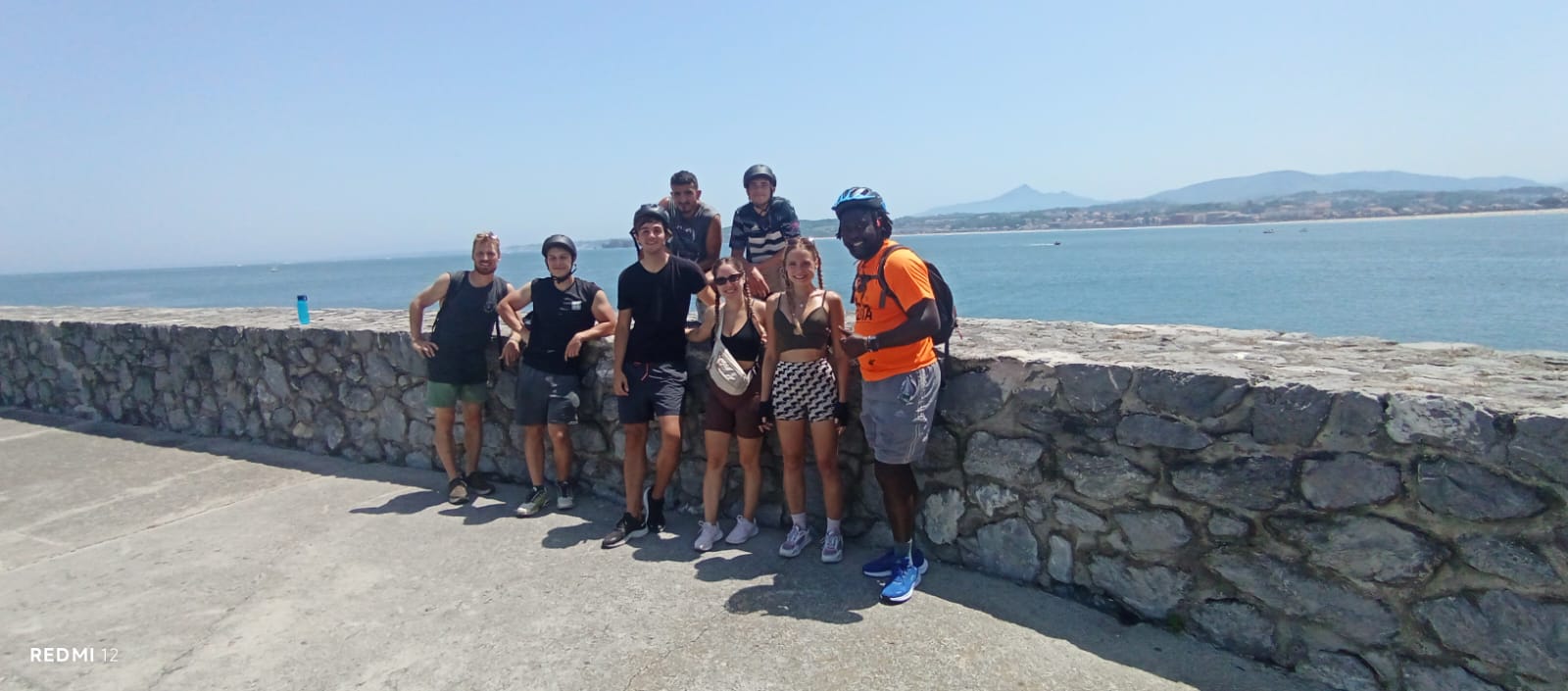
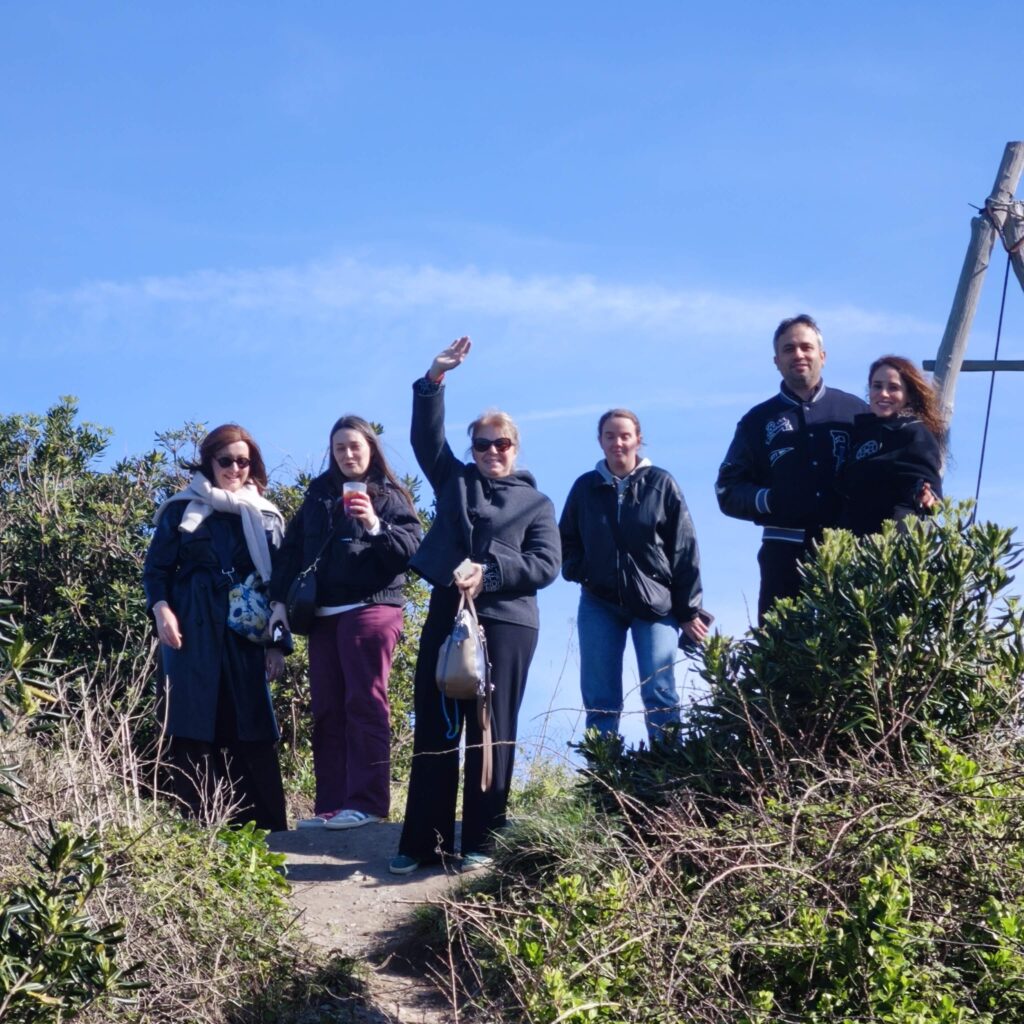
The hosting that happened during the Stronger Together project — in Tunceli, when the ABARKA team arrived for the Kick-off meeting and the international seminar; in Spain, when the Zembul women came for the Training the Trainer activity and for the Closing Meeting; in both places and in all the accumulated daily moments of the project’s eighteen months — was hosting in this fuller, more demanding sense. Not the management of comfort, but the practice of presence. Not the organisation of space, but the extension of self.
If You Want to Go Fast, Go Alone. If You Want to Go Far, Go Together.
This proverb, attributed to African oral tradition and widely disseminated across many cultures, is among the most frequently quoted in cooperative and civil society contexts. It has been used so often, by so many organisations, in so many funding applications and motivational presentations, that it risks becoming a slogan — a piece of decorative wisdom that has been separated from the actual practices it describes.
Stronger Together forced an encounter with the proverb’s literal truth.
The daily life of an Erasmus+ project is not, in its moment-by-moment reality, particularly inspiring. It is emails sent at unusual hours, meeting notes that need to be translated before they can be shared, tasks that were agreed to but have not been completed, communication gaps that accumulate into misunderstandings that accumulate into small crises that require careful management to resolve without damaging the relationship. This is the administrative texture of European cooperation, and it is real, and it is unglamorous, and it is the ground on which the project must be built regardless.
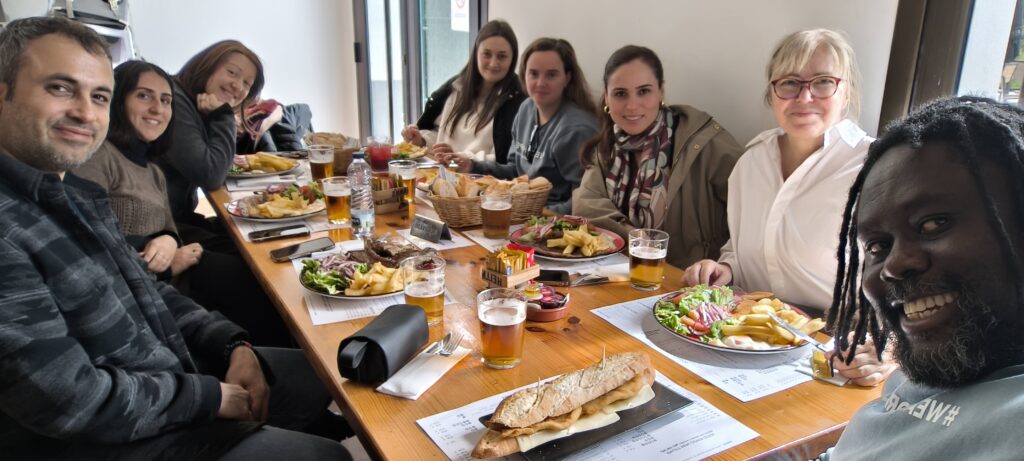
What shared social spaces during the project’s activities added to this texture was something the proverb describes but email cannot provide: the direct experience of moving together, at the pace of the slowest, in the direction of a shared destination. When you are physically cohabiting with your project partners — navigating the morning bathroom schedule, finding a dinner arrangement that works for different dietary habits, deciding collectively what to do when a session runs over and the evening is unplanned — you are practicing, in miniature, exactly the skills that a durable partnership requires. You are learning how the other person operates under pressure. You are discovering what they find funny and what they find difficult. You are building the specific, irreplaceable knowledge of a person that allows you to trust them when the work is hard and the direction is unclear.
The Zembul women who came to Spain for the training week and the closing meeting, and the ABARKA team who had been guests in Tunceli months earlier and later, did not simply share a workspace. They shared a pace. And moving at a shared pace — adjusting, accommodating, occasionally waiting for each other, occasionally being waited for — is the practice that makes the far destination reachable.
The Host Is Also Fed
There is a Wolof saying from Senegal that captures something that European project management literature rarely acknowledges: Ku nekk am xam-xam, am ko. Loosely translated: Whoever has knowledge shares it — and in sharing, gains more.
The relationship between host and guest in African hospitality traditions is not a one-directional relationship of giving and receiving. It is a reciprocal one. The host feeds the guest, but the guest brings news from the road — information, perspectives, experiences that the host does not have, because the host has been in one place and the guest has been travelling. The guest enriches the host’s understanding of the world. The hospitality is mutual even when it does not appear symmetrical.
This reciprocity was one of the most consistent and most surprising features of the Stronger Together hosting experiences. When the ABARKA team arrived in Tunceli, they went expecting to host a working meeting and receive their project partners. What they found was that Zembul had prepared not a reception but an education — days of sustained immersion in a model of solidarity economy, cooperative governance, and cultural hospitality that transformed the ABARKA team’s understanding of what Stronger Together was actually about. The hosts did not simply receive the guests. The hosts taught the guests. And the guests, humbled by what they had not known and now did, returned to Spain with a different kind of project.
When the Zembul teams came to Spain, the dynamic inverted without cancelling. ABARKA was the host, responsible for the space, the schedule, the logistics, the local knowledge that makes an unfamiliar place navigable. But the Zembul participants were not passive recipients. They brought their own knowledge — of production, of collective management, of what it means to build a cooperative in a context that does not automatically support it — and they shared it with the generosity of people who understand that knowledge gains value by being given away.
This is the African understanding of hospitality in practice: the house that is truly open receives more than it gives, because what it receives is the world.
Collective Problem-Solving: The Council Fire That Never Went Cold
The Igbo people of Nigeria have a tradition of community decision-making called Oha na eze — a gathering in which all voices are heard before any decision is made. The elders speak, but so do the young. Women speak alongside men. The decision that emerges is not the decision of the most powerful person in the room, but the decision that has survived the scrutiny of the community’s collective intelligence.
This tradition has equivalents across virtually every African cultural region: the indaba of Southern Africa, the baraza of East Africa, the palabre of West and Central Africa — each a form of structured communal deliberation that treats collective wisdom as more reliable than individual authority.
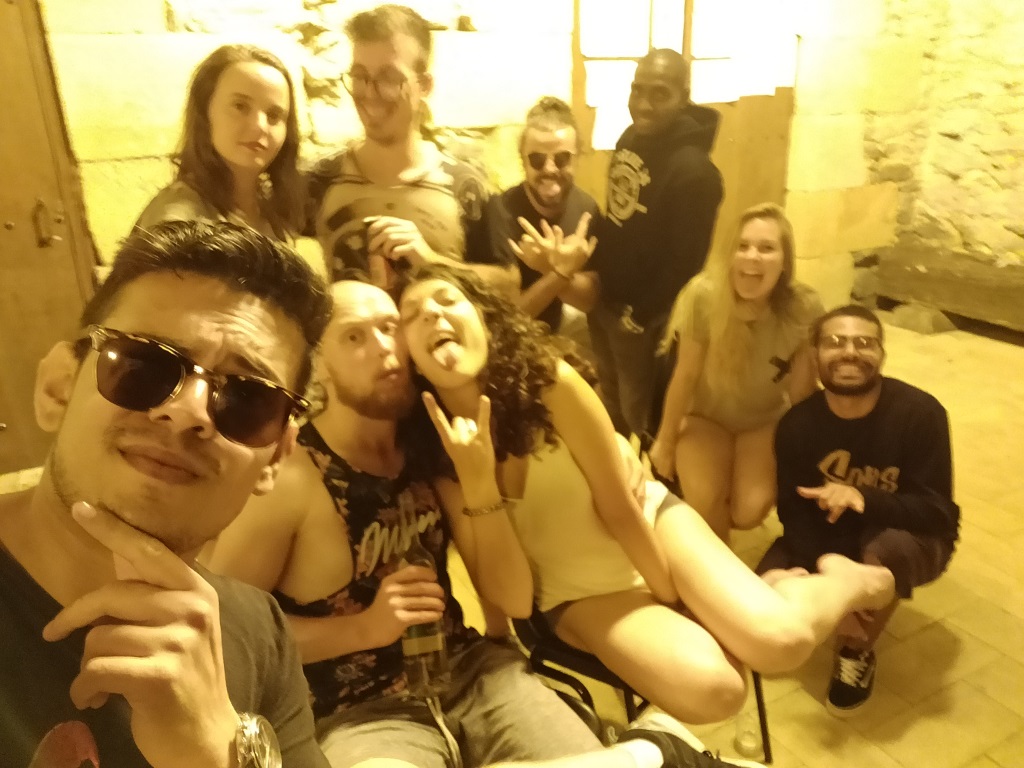
The Stronger Together project, in its shared living moments, produced something structurally similar: the informal council that happens in a kitchen at nine o’clock in the evening when the day’s programme has ended and the real conversations begin. Not the agenda items that were discussed in the session room, but the underlying questions — Why is this not working? What does she actually mean when she says that? How are we going to get through tomorrow if the translation isn’t better than today? — that the formal programme could not accommodate.
These conversations were collective problem-solving in its most honest form: unrecorded, unglamorous, uncompensated by any line in any budget, and absolutely essential to the project’s ability to function. The solution to the translation crisis — the decision to lean on Google Translate as a shared, imperfect, usable tool — was not made in a planning meeting. It was made by a group of tired people around a table, trying to figure out what to do, applying the collective intelligence of their combined experience to a problem none of them had planned for.
The African council does not require a formal convening. It requires only that people who are committed to a shared purpose are willing to think together when the problem is real. That willingness was present throughout the Stronger Together community living experiences, and it was one of the most quietly powerful forces in the project.
The Burden Is Lighter When It Is Carried Together
The Kikuyu of Kenya say: Ûtûgi ndûgatagirwo na mûndû ûmwe — the burden is not carried by one person alone. The image is of something heavy — a log, a water vessel, a grief — that becomes bearable when others place their hands on it alongside yours.
Hosting an international project activity is, in this sense, a heavy burden when carried alone and a manageable one when shared. The logistics of welcoming several people from another country — accommodation, meals, transport, activities, emotional dynamics, translation, unexpected problems — would be overwhelming for any single person to hold. What the community living model created was a distribution of that weight across the group, including across the guests themselves, who were not passive recipients of hospitality but active participants in the shared project of making the days work.
A Zembul participant who noticed that the coffee supply was running low and restocked it without being asked was not doing a small thing. She was enacting the same principle that the cooperative in Tunceli is built on: in a collective, you do not wait to be told what needs doing. You see it and you do it. The Spanish participant who stayed up late helping with a translation challenge was not going beyond her role. She was inhabiting the role that community living creates: the member of a temporary household who contributes what she has when it is needed.
This is what hosting as a collective practice produces, as opposed to hosting as an individual service: a group of people who have taken shared ownership of their common situation, and who respond to its demands with the particular energy that ownership generates. Not the dutiful compliance of people doing their jobs, but the engaged initiative of people who have decided that the situation they are in is one they are responsible for together.
When the Guest Leaves, the House Is Richer
There is a beautiful Malian proverb: L’étranger qui repart laisse une lumière dans la maison. The stranger who leaves takes their leave, but the house they inhabited is illuminated by their passage. Something of them remains — a way of seeing, a story, a habit, a relationship that did not exist before their arrival.
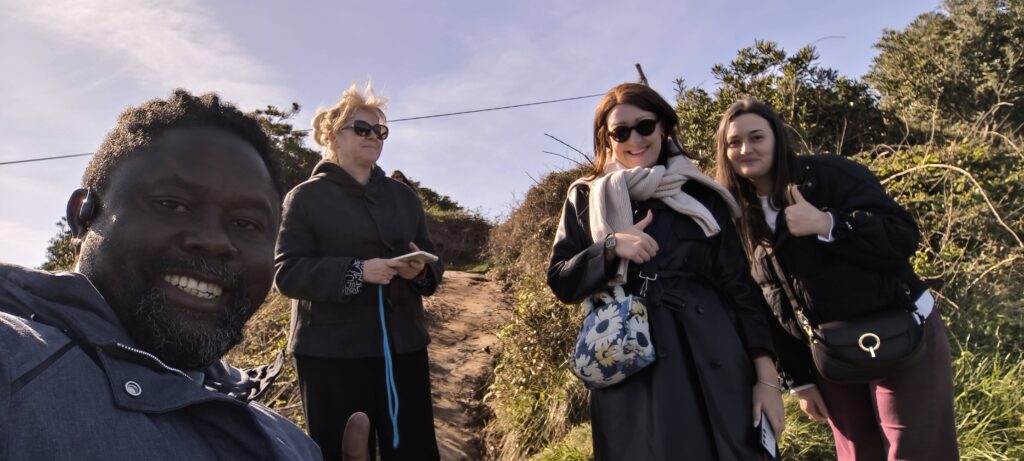
Every departure from the shared spaces of Stronger Together — at the end of the Kick-off meeting in Tunceli, at the end of the training week in Spain, at the end of the International Exchange — left this kind of light. Not metaphorically, but specifically: the ABARKA team returned from Tunceli knowing something about solidarity economy and cultural hospitality that they had not known before. The Zembul women returned from Spain with a different relationship to their own competence and their own international potential. The guest partners who came to Tunceli from France, North Macedonia, Moldova, and Serbia returned home with four new partner organisations, three new project ideas, and a network they had not possessed a week earlier.
The European Commission describes this kind of impact, in the formal language of programme evaluation, as the multiplier effect. The proverb names it more precisely: it is what happens when a house is genuinely open, when the hospitality is real rather than performed, and when both host and guest understand themselves to be participants in a shared transformation.
Ubuntu and the Erasmus+ Dream
The EU values that the Stronger Together project formally commits to — human dignity, equality, solidarity, freedom, intercultural dialogue — are not European inventions. They are human ones, expressed in the formal language of a particular political and legal tradition, but recognisable across every culture that has thought carefully about what it means for people to live well together.
Ubuntu — the southern African philosophical principle that a person becomes a person through other people — is not so different, at its core, from what the Erasmus+ programme aspires to produce through international exchange: human beings who are made more fully themselves by encounters with people who are different from them, who carry something of those encounters permanently, and who return to their communities expanded by what they have received.
The difference is that ubuntu is not a programme. It is a way of being that is practiced in the ordinary texture of daily life — in the way a door is opened, in the way food is shared, in the way a problem is taken on as a collective responsibility rather than an individual burden. It does not require a grant application. It requires the decision, made every day in small ways, to keep the house open.
Stronger Together made that decision. In Tunceli and in the Basque Country, in kitchens and training rooms and on mountain roads, in the imperfect and beautiful mess of people from different worlds trying to understand each other and build something together — the project kept the house open.
And the house, as a result, is richer.
This article is part of the dissemination series for «Stronger Together» (STOG), an Erasmus+ KA210-ADU Small-Scale Partnership in Adult Education, co-funded by the European Union. The project brings together ABARKA (Spain) and Zembul Women’s Production Cooperative (Tunceli, Turkey) to promote women’s economic independence through education and intercultural exchange. This article was written by Clotaire Ntienou, co-founder of ABARKA.