Registrations for DELEPO 4.0 close on 20 November 2026. Before the next chapter opens in Urnieta on 20 January 2027, we go back to where the last one began: a phone camera, an empty training room and a house getting ready to welcome youth workers from across Europe.
A walk through the house, January 2026
The video was filmed on 26 January 2026, at the very start of DELEPO 3.0. Clotaire, ABARKA’s Operational Director, picks up the camera and gives a guided tour before the participants arrive.
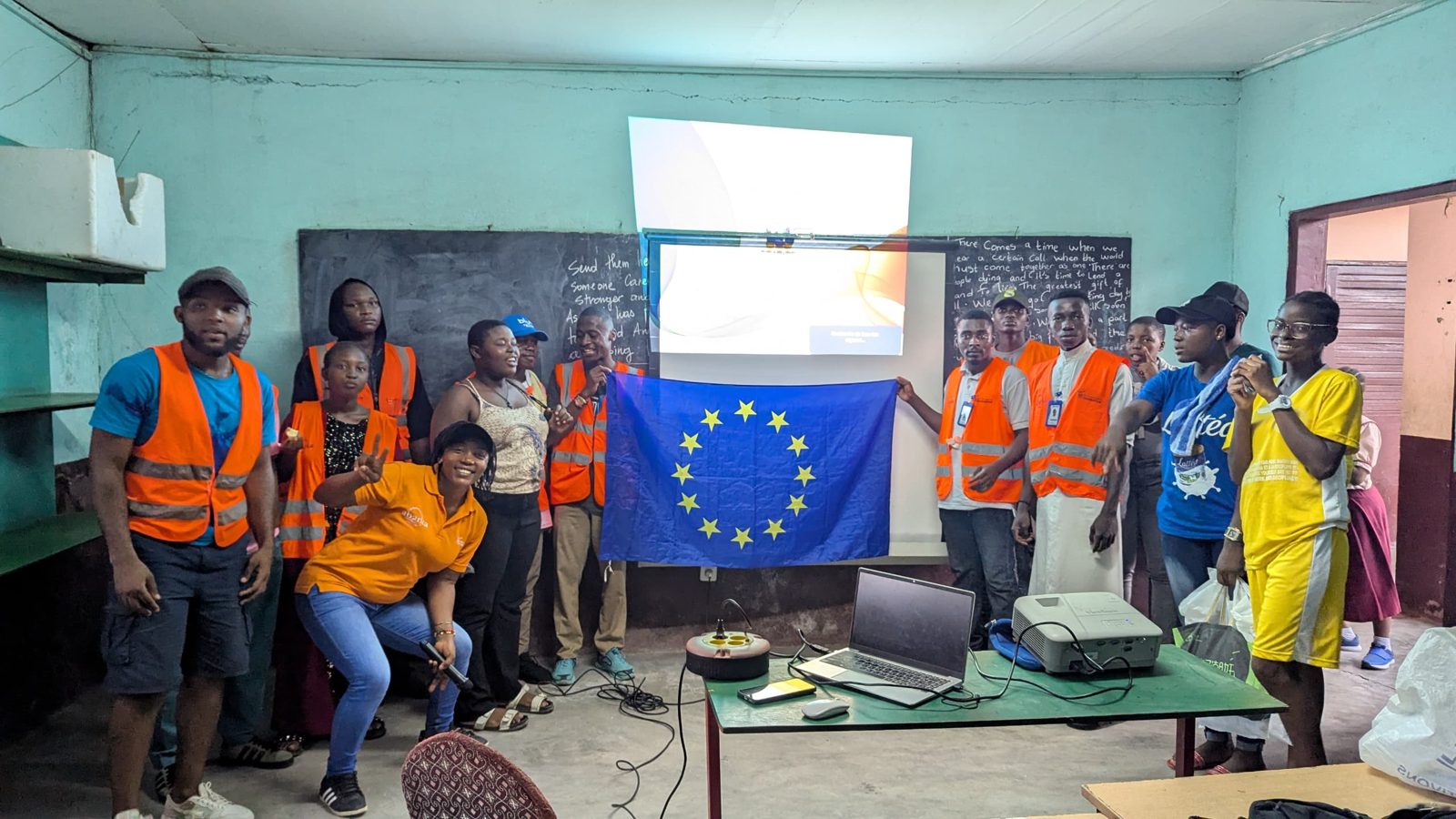
- The training room — flipcharts, a projector, the ABARKA roll-up and the Erasmus+ banner, ready for the first session.
- The shared living spaces — sofas and common areas where conversations continue long after the programme ends.
- The kitchen — where participants cook, eat and share their cultures every day.
Nothing is staged. It is the honest picture of a residential training course: people learning, living and building partnerships under the same roof.
What DELEPO 3.0 taught us
DELEPO 3.0 participants rated peer learning at 95% satisfaction and facilitation at 92%. Their feedback, and our ongoing dialogue with partners, also showed what is still missing: organisations need strong structures, not only skilled individuals.
| Edition | Focus | What it taught us |
|---|---|---|
| DELEPO 1.0 | Youth employability | Youth workers need organisational infrastructure, not only individual skills |
| DELEPO 2.0 | Project writing | Writing skills are necessary but not enough: vision and partnership quality matter |
| DELEPO 3.0 | AI-enhanced projects | Organisations must slow down, reflect and build sustainable leadership |
| DELEPO 4.0 | Strategic Leadership Lab | Leadership, governance, partnerships, impact, ethical AI and well-being |
DELEPO 4.0 tackles six challenges that many youth organisations will recognise:
- Overloaded leadership — responsibilities sit on 1–3 key people, with no succession plan.
- Concentrated knowledge — project know-how is lost when staff leave.
- Uneven partner quality — partners chosen on personal ties, with unclear roles.
- Reactive planning — chasing calls without a long-term strategy or impact measurement.
- Neglected well-being — burnout normalised as “passion for the cause”.
- Unregulated AI use — no ethical assessment, data-protection policy or bias awareness.
The shift: from how to write better projects to how to build organisations that sustain quality, impact and well-being.
DELEPO 4.0 at a glance
| Title | Strategic Leadership & Organisational Capacity Lab |
| Dates | 20–28 January 2027 (arrival 20 Jan, departure 28 Jan) |
| Venue | Casa Rural Enbutegi, Urnieta, Gipuzkoa (Basque Country, Spain) |
| Format | 7 intensive residential training days + 6 months of online follow-up |
| Participants | 21 experienced youth workers + 2 trainers |
| Language | English (minimum B1) |
| Recognition | Youthpass certificate |
| Programme | Erasmus+ KA151 Youth, project 2026-1-ES02-KA151-YOU-000399989 |
Your next step: register before 20 November 2026
Places are limited and the deadline is close. If your organisation rests on too few shoulders, or if you want to lead with strategy instead of urgency, this is your moment.
📝 Register hereRead the full infopack
Questions? Write to director@abarka.org
The next chapter of DELEPO starts in Urnieta. Will you be in the room?
En castellano
Este vídeo se grabó el 26 de enero de 2026, al inicio de DELEPO 3.0: un recorrido por la sala de formación, los espacios compartidos y la cocina donde las personas participantes conviven, aprenden y crean alianzas. Ahora llega DELEPO 4.0 – Laboratorio de Liderazgo Estratégico y Capacidad Organizativa, del 20 al 28 de enero de 2027 en la Casa Rural Enbutegi (Urnieta, Gipuzkoa), para personas trabajadoras en el ámbito de la juventud con experiencia. Inscripciones abiertas hasta el 20 de noviembre de 2026: formulario de inscripción · infopack.

Erasmus+ KA151 · Project 2026-1-ES02-KA151-YOU-000399989
Funded by the European Union. Views and opinions expressed are however those of the author(s) only and do not necessarily reflect those of the European Union or the Spanish National Agency – Instituto de la Juventud (INJUVE). Neither the European Union nor the granting authority can be held responsible for them.