On post-exchange initiatives, the KA151 Leadership training in Spain, and the living proof of what «Stronger Together» was always building toward
Published as part of the Erasmus+ KA210-ADU project «Stronger Together» — ABARKA & Zembul Women’s Cooperative
When a project ends, the most important question is not what it produced. It is what it started.
Grant reports measure outputs: the number of participants trained, the modules developed, the workshops delivered, the social media posts published, the certificates issued. These things matter — they are the evidence that public funding was used to do what the application said it would do. But they are not, ultimately, the measure of whether a project succeeded in its deepest purpose. That measure is found in what happens after the final report is submitted. In what the participants do next. In whether the relationships, the knowledge, and the confidence built over the life of the project translate into action that the project itself did not fund.
By that measure, Stronger Together has produced something that, when it was being written as a proposal in early 2024, was described as a goal but could not have been known as a certainty: a network that did not exist before, now actively generating its own momentum.
The November 2025 International Exchange: A Network Becomes a Community
The International Exchange activity (Activity A5) of Stronger Together was designed to be a forward-looking event — not a celebration of what had been done, but a working session for what could come next. Three days in Tunceli, with the two core partners joined by four guest organisations from four different countries, structured around the specific question of what future collaborations were worth pursuing and how to pursue them.
What the project had not fully anticipated was the speed and seriousness with which that question would be answered.
The November 2025exchange brought together a group of organisations that had now spent over a year building awareness of each other’s work — through the project’s dissemination activities, through the connections made at earlier stages, through the slow accumulation of trust that the project’s various activities had produced. The guest partners from France, North Macedonia, Moldova, and Serbia arrived in Tunceli not as curious observers encountering an unfamiliar initiative, but as organisations that had already decided, at some level, that this network was worth being part of. The Innovation Café format of the third day — designed specifically to generate project ideas and assess their feasibility — produced not the tentative, exploratory sketches that such sessions often yield, but specific proposals, rooted in specific partner complementarities, with specific target populations in mind.
The project had set a KPI of three project ideas for future collaboration. By the end of the three days, that number had been exceeded. By the end of the following quarter, it had been dramatically exceeded in ways that the KPI table could not have measured even if it had been prescient enough to try.
January 2026: Moldova and North Macedonia Come to Spain
Three months after the November exchange, two of the network’s newest members made a different kind of journey.
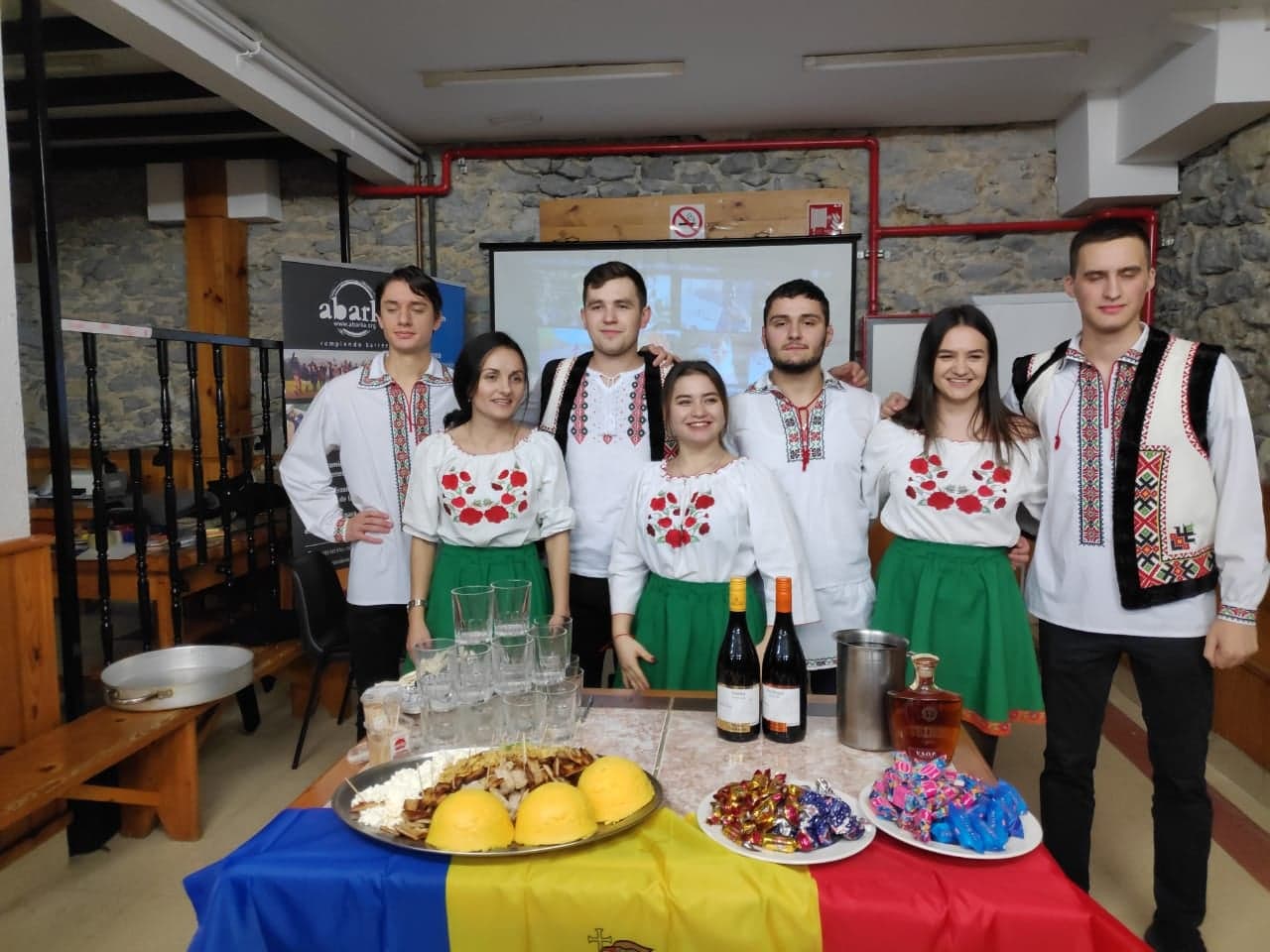
The leaders of the Moldovan and North Macedonian partner organisations — organisations that had attended the International Exchange as guests, had seen the Stronger Together project in its final phase, and had spent the subsequent months in active communication with ABARKA about the project ideas that had emerged — were invited to Spain to participate in a KA151 Leadership and Entrepreneurship training course hosted by ABARKA.
The KA151 programme — Erasmus+ mobility for adult education staff — is specifically designed to support the professional development of those who work in adult education contexts, building the kind of institutional and personal capacity that makes organisations more effective partners in European cooperation. For the Moldovan and North Macedonian leaders, the January 2026 participation in Spain represented two things simultaneously: a professional development opportunity in its own right, and a concrete deepening of the relationship between their organisations and ABARKA that had begun at the International Exchange only months earlier.
The logistics of this invitation were themselves significant. ABARKA had coordinated an international mobility activity, navigated the administrative requirements of the KA151 application, and successfully integrated two organisations from countries that are not EU member states into a programme typically dominated by established European civil society networks. For Zembul Women’s Cooperative — watching this unfold from Tunceli, as a co-partner of the organisation that was now hosting an international training course — it was a concrete demonstration of what the Stronger Together partnership had made possible: ABARKA’s capacity to operate as a hub for international cooperation had grown, visibly, over the eighteen months of the project.
The January training was not only professional. It was relational. The Moldovan and North Macedonian leaders who arrived in Spain were entering a space that they now partially recognised: the organisation, the team, the Basque context, the social economy ecosystem they had encountered first in Tunceli and were now meeting in its home territory. This familiarity — built across two international encounters in two different countries, through sustained digital communication in between — is the kind of relationship capital that makes European cooperation sustainable in practice rather than just in principle.
February and March 2026: The Project Proposals Land
The most concrete and most measurable evidence of what Stronger Together started came in the February and March 2026 Erasmus+ application deadlines.
In those two rounds, five countries — Moldova, Turkey, North Macedonia, Spain, and Serbia — each submitted an average of three project applications. Each of those applications involved at least one of the other network partners in the consortium. Taken together, this represents approximately fifteen new project proposals, generated within months of the International Exchange, built from the specific relationships and the specific project ideas that had crystallised in Tunceli in November 2026.
The numbers deserve to be held for a moment before being explained, because they are not normal.
Three project applications per organisation, per deadline round, involving transnational partners who were unknown to each other two years ago, is not the typical aftermath of a small-scale partnership. Stronger Together was a €60,000 project. Its budget was modest. Its timeline was eighteen months. Its ambition was, by European project standards, appropriately scaled: build capacity, strengthen cooperation, develop training tools, produce a small number of concrete learning outcomes for a defined group of participants. The project achieved all of this. But it also produced, as a by-product of the relationships it built, a transnational network that is now generating its own funding applications at a rate that a much larger and more expensive programme would have been proud to claim.
Understanding why requires understanding what the International Exchange actually produced, beyond its official outputs.
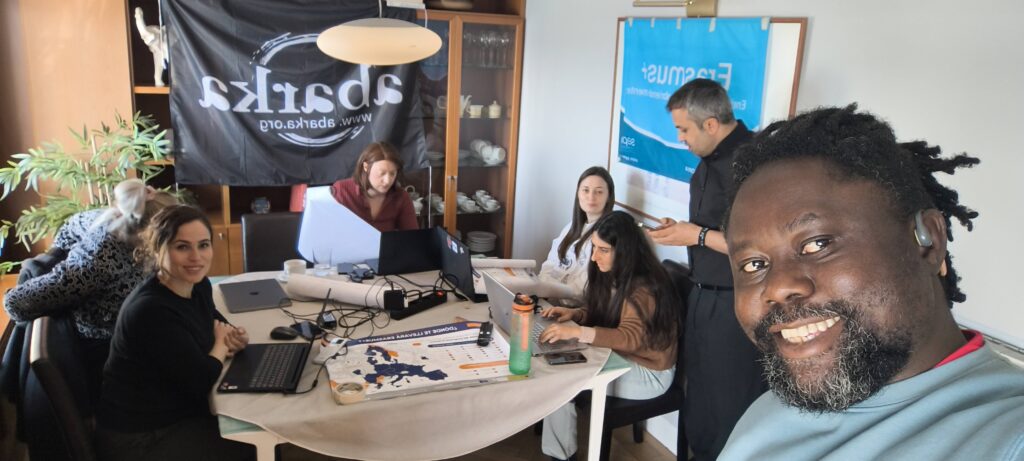
What the Exchange Built That the Budget Did Not Fund
The three days in Tunceli in November 2025 were productive in the ways the project had designed them to be: information was shared, project ideas were discussed, connections were made, minutes were taken and certificates were issued. All of that is documented and measurable.
But something else happened in those three days that does not appear in any KPI table. The five organisations that were present — ABARKA, Zembul, and the four guest partners — came to understand, through direct experience, that they were compatible in the specific and demanding sense that matters for European project cooperation: they shared enough values, enough approach to their work, and enough genuine interest in each other’s communities to make the difficult process of joint project development worthwhile.
Transnational project consortia fail for many reasons, but the most common one is not a mismatch of competences or a miscalculation of budgets. It is the discovery, usually too late in the process, that the partners do not actually trust each other enough to navigate the inevitable difficulties of collaboration. Trust of that kind cannot be built through email exchanges or video calls or reading each other’s project portfolios. It requires encounter — the specific, irreplaceable knowledge of a person and an organisation that comes from having been in the same room together, having worked through a problem together, having shared a meal and a difficult conversation and an afternoon in the Munzur Valley or at a Basque farm and come away with a sense of the people behind the institutional profiles.
Stronger Together built this trust deliberately and patiently across its entire eighteen-month arc. The International Exchange was not the beginning of the relationship — it was the moment at which a relationship that had been developing through successive stages of the project became a network with enough shared history to start generating its own next chapter.
The project proposals submitted in February and March 2026 are the financial expression of that trust. Each one represents a group of organisations deciding that what they found in each other was worth the very significant investment of time and energy that European project applications require.
The Geography of the New Applications
The five countries involved in the post-exchange applications are not a random selection. They are the five countries that the project’s design had brought into contact with each other: Spain and Turkey as core partners, France, North Macedonia, Moldova, and Serbia as guest partners — with France appearing in the original guest partner cohort but not among the five countries leading new applications, suggesting that the network’s most active new nodes were the organisations from the former Eastern Bloc and candidate countries whose need for European network access was, arguably, most urgent.
This distribution is worth reflecting on from a European policy perspective. One of the stated objectives of the Erasmus+ programme is the inclusion of organisations from less well-connected parts of Europe — particularly from candidate countries, from regions with less developed civil society infrastructure, and from communities that have historically had less access to European cooperation networks. The Stronger Together guest partner model, by deliberately inviting organisations from Moldova, North Macedonia, and Serbia to participate in an activity hosted in Tunceli, created exactly the kind of inclusion that the programme aspires to produce: not the passive inclusion of being named on a document, but the active inclusion of participating in a working session, building real relationships, and emerging as a co-generator of future projects.
The Moldovan and North Macedonian leaders who came to Spain in January 2026 were not attending as beneficiaries of ABARKA’s generosity. They were attending as partners — with their own expertise, their own networks, their own contribution to make to the development of the KA151 programme they were participating in. The fifteen project applications being built across five countries are not ABARKA projects that happen to include these organisations as junior partners. They are genuinely collaborative proposals, in which each organisation brings something specific and the whole is stronger than any individual part could produce alone.
This is the Erasmus+ aspiration made concrete.
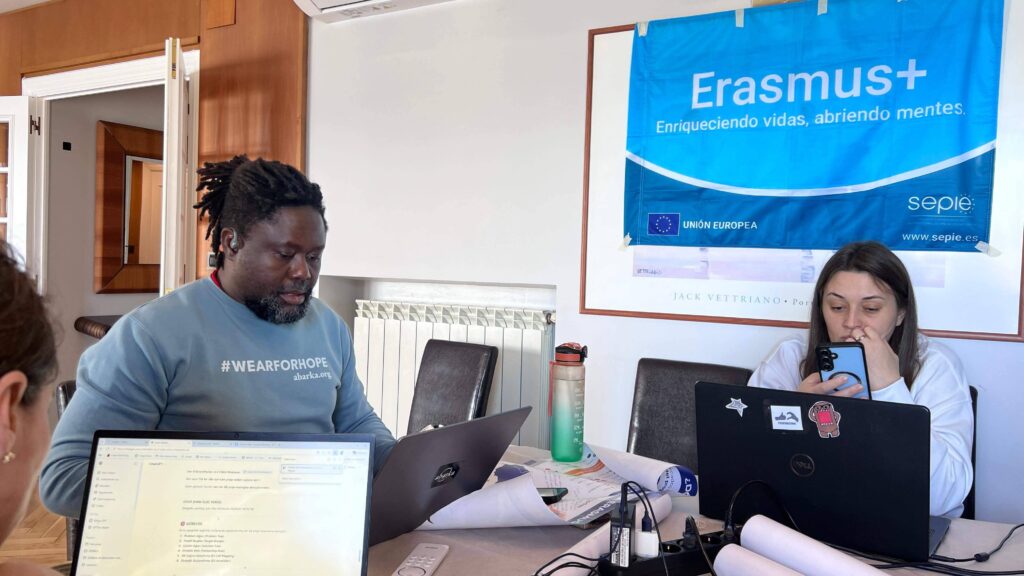
From Participants to Project Leaders: The Transformation of Zembul
Within this story of network expansion and project proliferation, the trajectory of Zembul Women’s Cooperative deserves particular attention.
Eighteen months before the November 2025International Exchange, Zembul was a five-year-old women’s production cooperative in Tunceli with no international experience, no Erasmus+ participation, and a clear set of training needs that it had articulated, with impressive precision, in a needs analysis survey. It was a respected local organisation with a strong cooperative model, but its horizon was fundamentally local.
By the time the February and March 2026 deadline arrived, Zembul was a participating partner in multiple transnational project applications. Its leadership had navigated an international exchange, hosted fourteen participants from five countries in Tunceli, and been part of the Innovation Café process that generated the project ideas now working their way through Erasmus+ application portals. The women of Zembul who had never previously participated in a European programme are now, in some of the new applications, listed as partners with specific roles and specific contributions to defined project objectives.
The Stronger Together project application had described this possibility in its section on expected long-term impact: the goal of introducing Zembul to the Erasmus+ programme and expanding their international interaction experiences. What the application could not describe — because it is the kind of thing that only becomes visible in retrospect — is the specific quality of transformation this represents. Zembul did not simply gain access to a European funding mechanism. It gained a legitimate place in a European network, with all the identity and credibility that entails.
The Lesson About Sustainability That Most Projects Miss
The sustainability question haunts European project documentation. Every application must answer it — how will the outcomes be sustained after the project ends? — and most answers are, frankly, optimistic in ways that the subsequent reality does not always bear out. Training materials are developed, uploaded to a website, and rarely accessed again. Networks are established, newsletters are sent for six months, and contact gradually diminishes as the organisations involved return to the demands of their own work.
Stronger Together produced a different answer to the sustainability question — not because it was cleverer than other projects, but because it treated the International Exchange not as a showcase activity at the end of a project, but as a seeding activity at the beginning of a network. By bringing guest partners into the project’s final stage rather than simply inviting them to a closing event, it gave them not a polished presentation of completed work but an active encounter with a living project, at a moment when new directions were still being shaped. They arrived as potential partners, and they left as actual ones.
The January 2026 KA151 training in Spain deepened two of those relationships before the ink was dry on the November exchange minutes. The February and March deadlines captured the momentum before it dissipated.
This sequence — encounter, follow-up, application — is not automatic. It required the Stronger Together team to remain actively available and responsive in the months after the International Exchange, to facilitate the consortium-building processes that led to the applications, and to invest time and energy in supporting partners whose Erasmus+ experience was limited. That investment is not visible in the project’s budget. It is visible in the results.
What Comes Next
As of March 2026, approximately fifteen project proposals are in submission or review across five countries. Not all of them will be funded. European project competition is intense, and the application process selects for experience and established track records in ways that systematically disadvantage newer network participants. Some of the applications submitted by newer partners will not succeed on the first attempt. Some may never be funded in their current form.
But this is not a reason for pessimism. It is a description of the process through which organisations develop the European project competence that makes subsequent applications more likely to succeed. The Zembul Women’s Cooperative did not participate in any Erasmus+ projects before Stronger Together. ABARKA, as the project’s lead organisation, had submitted three applications in the KA210-ADU field before this project without success. The organisations from Moldova, North Macedonia, and Serbia are building their first transnational networks through these applications. If even a fraction of the fifteen proposals are funded in this round, the network will have new resources to deepen and extend what Stronger Together began. If fewer than expected are funded, the organisations will have gained the specific, irreplaceable learning that comes from navigating an unsuccessful application — the understanding of what reviewers are looking for, what the proposal failed to communicate, what needs to be stronger next time.
In either case, the network exists. The relationships are real. The project ideas are serious. The organisations involved are committed to continuing. The question of sustainability has been answered not in the words of a project application but in the actions of the people who attended an International Exchange in Tunceli, built something together in three days, and went home and started writing.
That is what Stronger Together was always building toward. That is what it produced.
By Clotaire Mesmin Ntienou Tchiengue
This article is part of the dissemination series for «Stronger Together» (STOG), an Erasmus+ KA210-ADU Small-Scale Partnership in Adult Education, co-funded by the European Union. The project brings together ABARKA (Spain) and Zembul Women’s Production Cooperative (Tunceli, Turkey) to promote women’s economic independence through education and intercultural exchange.