Published as part of the «Stronger Together» Erasmus+ Adult Education Project — KA210-ADU | March 26, 2026
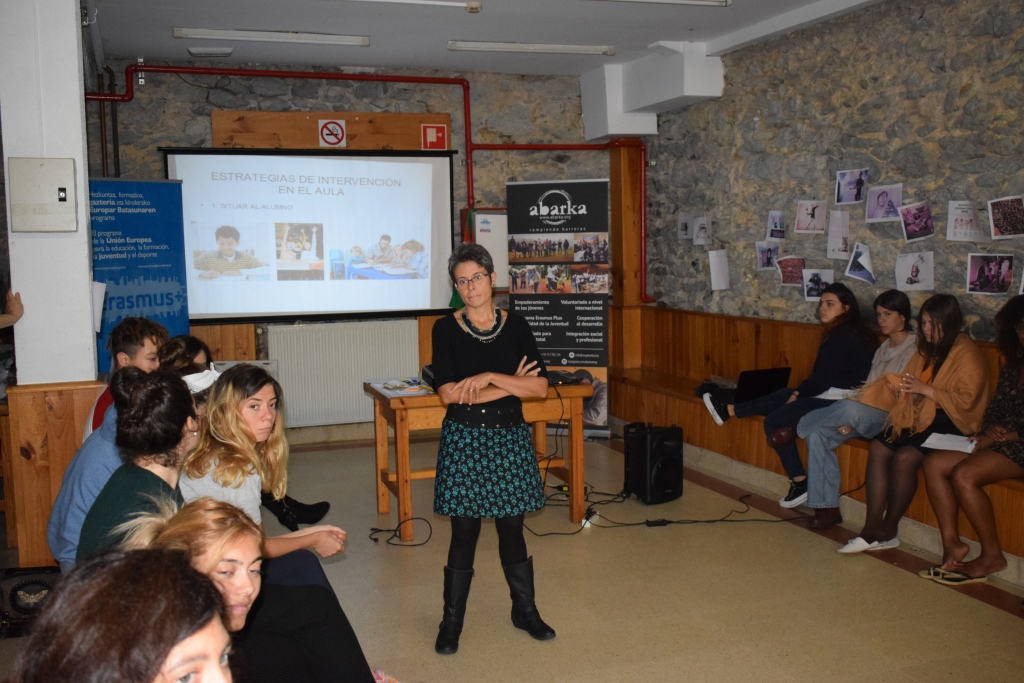
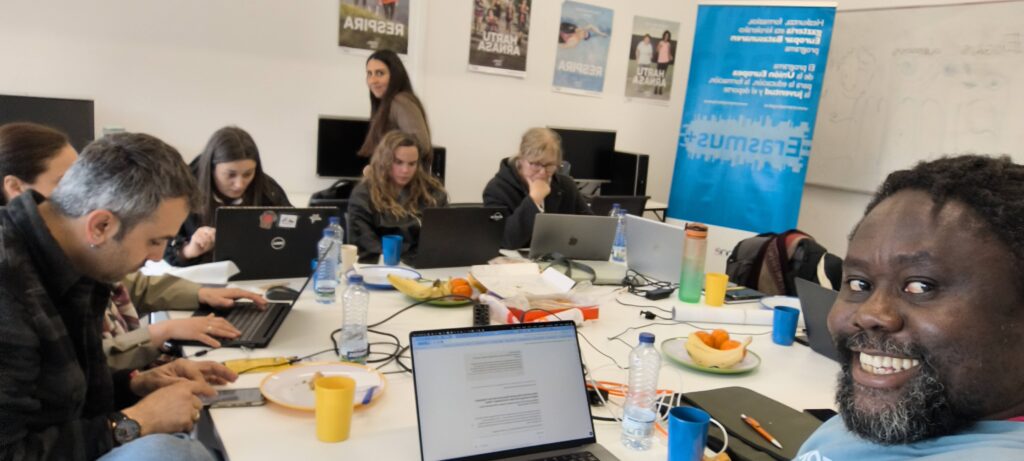
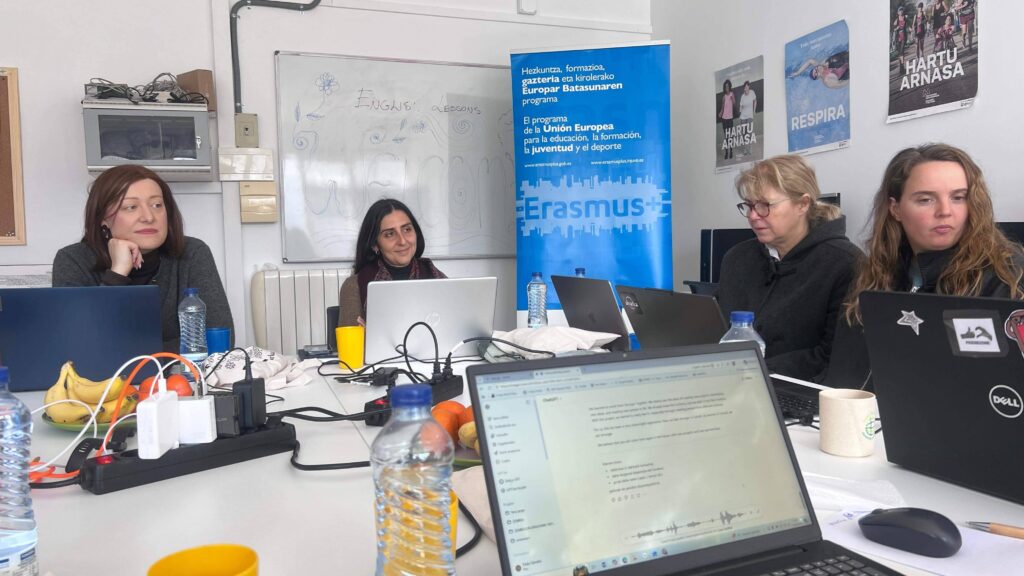
Picture this. Eighteen women in a room in Spain. Nine from the Basque Country. Nine from Tunceli, Turkey. All of them there for the same reason — to learn together, to share knowledge about cooperatives, women’s economic independence, and mutual solidarity. The project documentation is prepared, the agenda is set, the training modules are ready. Everything is in order.
Except that barely one in five participants shares a common language.
This is the moment where many well-intentioned projects quietly begin to come apart at the seams. And this is also — as it turned out — where Stronger Together found something unexpected: a lesson about learning itself, about problem-solving under pressure, and about the quiet power of tools we had long forgotten we possessed.
A Gap That the Application Did Not Fully Anticipate
When the Stronger Together project was written and submitted, the language question had been addressed in the most logical way available: a human third-party translator would be provided for bilingual facilitation. It is the standard approach, the professional approach, the safe approach.
What the application could not fully anticipate was the lived arithmetic of the situation. Nine women from Zembul Women’s Cooperative in Tunceli, the majority of whom spoke Turkish and Kurdish but not English. Nine women from Spain, operating primarily in Spanish and Basque, with limited or no English. A common working language — English — that was, in practice, common to almost nobody present.
The result was what anyone who has facilitated multilingual groups will immediately recognise: the triple relay translation. A sentence spoken in Turkish, rendered into English, then into Spanish. A response formulated in Spanish, moved back through English, returned to Turkish. Six translation passes for a single exchange of ideas. Breakout groups that could not meaningfully break out, because the language boundary followed every participant into the room. Discussions that started with energy and ran, slowly, into the sand.
This is not a failure of preparation. It is one of the honest, unglamorous realities of intercultural cooperation — the kind that project documentation rarely captures and that participants rarely speak about publicly, because there is an unspoken pressure to report success and move on. The energy drained. Motivation faltered. Small tensions surfaced, the kind that are really frustrations in disguise — the frustration of having something meaningful to say and no reliable channel through which to say it.
The Tool That Was Always There
At some point in the middle of this, a phone appeared on the table. Someone opened Google Translate.
What followed was not a technological revolution. It was something more modest and more instructive than that: a group of adults, in a room together, remembering that they already had what they needed. Google Translate is not a new tool. It has been available, free of charge, for years. Most of the participants had it on their phones. Some had used it before. None had thought, in the formal context of a professional training programme, to reach for it.
The platform offers more than most people realise. Beyond the basic text-to-text function, there is live camera translation, voice input, text-to-voice output, and a conversation mode that allows two people speaking different languages to hold something approaching a real dialogue through a shared screen. These are not perfect solutions. They are not a replacement for human interpretation. But in a room where the alternative was paralysis, they were precisely enough.
What changed when the phone came out was not the quality of the translation — it was the quality of the connection. A Turkish-speaking woman could express a thought, hear it rendered in Spanish, watch the face of her Spanish counterpart change as understanding arrived. The delay remained. The awkwardness remained. But the direction changed: instead of circling the same misunderstanding, the group was moving forward, imperfectly, but forward.
A Personal Reflection: Learning to Learn Again
I want to be honest here, because this is an article about unplanned learning, and honesty is what makes learning real.
I learned English years ago, and in learning it, I used translation tools constantly — not as a crutch, but as a scaffold, the kind of support that exists so you can build something and then stand without it. Once the building was standing, I put the scaffold away. I had not seriously used Google Translate in years.
This project brought it back. And in returning to a tool I had once depended on and then set aside, I was reminded of something important: tools do not have expiry dates. Skills we acquired and then stored do not disappear. The capacity to adapt — to look around at what is available, at what is free, at what is already in our pockets — is itself a form of competence, and it is one that does not get enough credit in professional development conversations.
The challenge we faced in that room in Spain was real. The energy loss was real. The motivational dip was real. But here is what I believe, and what this experience confirmed: the issue was never the challenge itself. The issue was the time it took to activate the solution mode. Many people, faced with a comparable breakdown, would have concluded that the situation was unworkable and accepted a diminished outcome. The team did not do that. They stayed in the room, they stayed with the problem, and they found the tool that was already there.
What Adult Education Research Tells Us
This experience, frustrating in the moment and clarifying in retrospect, sits squarely within a body of research that adult educators have been building for decades.
Malcolm Knowles’ foundational work on andragogy established that adult learners are fundamentally self-directed — not in the sense that they need no support, but in the sense that they are capable of taking ownership of their own learning when the conditions are right. What the Google Translate moment in Spain represented was exactly this: a group of adult learners, encountering an obstacle, exercising their agency to route around it.
Research in digital literacy for adult education consistently highlights a gap that is less about access to technology and more about what practitioners call «activation» — the capacity to recognise, in a given moment of difficulty, which available tool is relevant and to reach for it without embarrassment or hesitation. This gap is not a knowledge gap. It is a confidence gap, a habit gap, and sometimes simply an attention gap. We forget what we know. We forget what we have. Pressure, fatigue, and the weight of expectations can make tools invisible that are sitting right in front of us.
Studies in informal and incidental learning — a concept developed by Marsick and Watkins in adult education scholarship — describe how some of the most durable learning happens not in formal instructional moments but in the friction of real problems: unscripted, unplanned, sometimes uncomfortable. The digital workaround that emerged in the Stronger Together training session was not in the project workplan. It will almost certainly be in the next one.
The Erasmus+ Dimension: Digital Transformation as a Living Practice
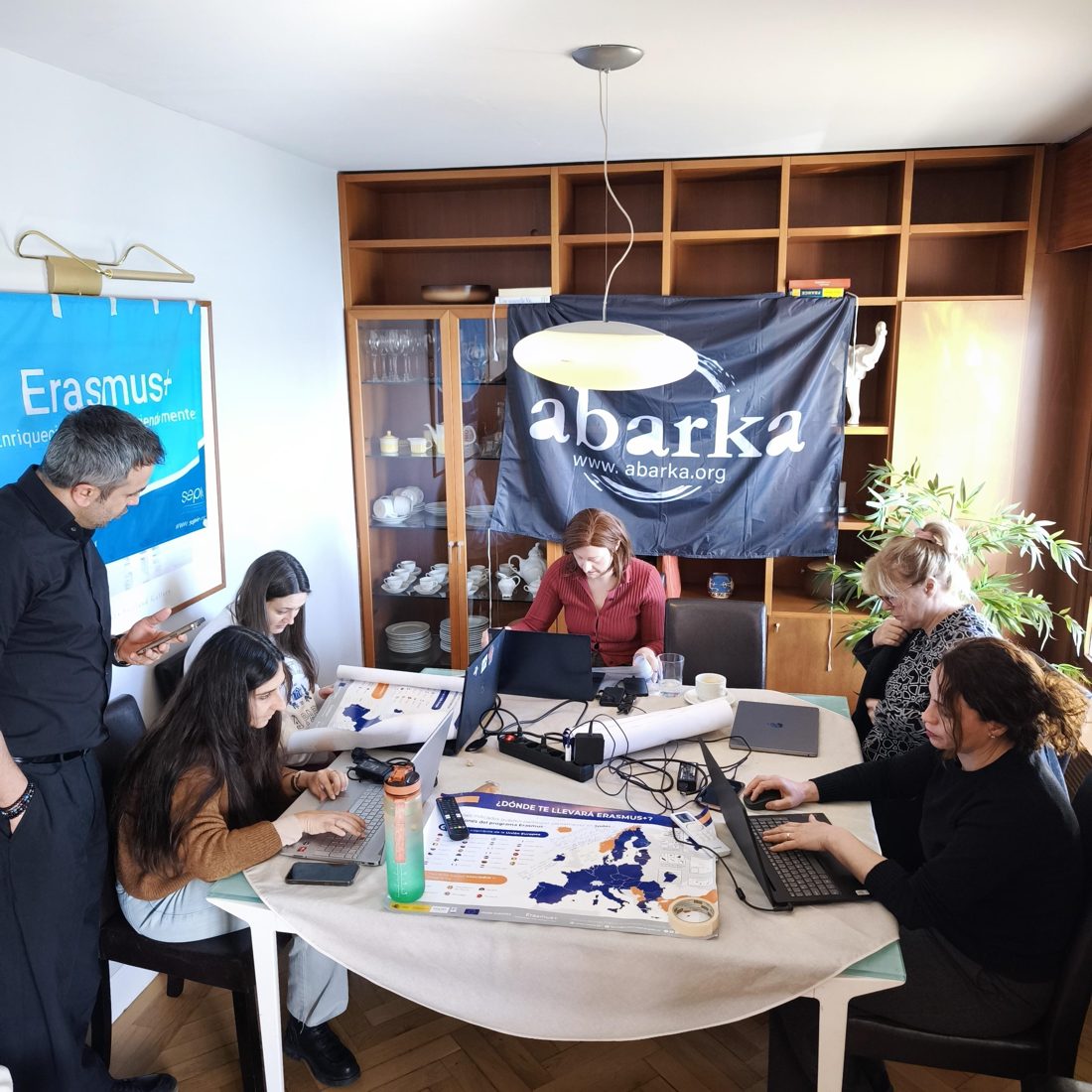
The Stronger Together project was designed with digital transformation as one of its core themes — not as a topic to be discussed in theory, but as a capacity to be built in practice. The training modules include digital visibility, social media management, and online communication skills. The project’s own management infrastructure relies on Microsoft Teams, shared digital documents, and online monitoring tools.
What happened in the training room added a dimension that was not formally planned: digital tools as equity instruments. Language access is, at its core, an inclusion issue. When the majority of participants in a multilingual group cannot access the primary working language, the formal knowledge-sharing agenda becomes, in effect, inaccessible to them. A free translation application did not solve this problem entirely, but it redistributed access in a meaningful way — making it possible for women who had never participated in an international programme before to contribute to a discussion that would otherwise have proceeded without them.
This is what digital transformation looks like in adult education when it is working: not slides about apps, but apps that change who gets to speak.
EU Values in Practice: Inclusion, Dignity, and the Refusal to Give Up
There is a European value that does not appear explicitly in the standard list — the value of perseverance in the face of difficulty, of refusing to accept that complexity justifies exclusion. It underpins all the others.
Human dignity was present in the moment someone decided that the Turkish-speaking participants deserved to be heard in that room, regardless of what the original plan said.
Equality was practiced, imperfectly but genuinely, every time a phone was held up so that a woman who had no English could follow a discussion that was nominally happening in her presence.
Solidarity was the group decision to slow down, to use a workaround, to accept that the session would be less smooth than planned — because the alternative was to leave people behind, and that was not acceptable.
What This Teaches Us for the Future
Stronger Together is a project about women’s economic independence, cooperative development, and intercultural exchange. It is also, now, a project that has something to say about what happens when plans meet reality — and what it means to respond with creativity rather than defeat.
The translation challenge will not be the last crisis in this project, or in any project that attempts genuine cross-cultural, multilingual cooperation. There will be other moments where what was planned and what is needed diverge. What matters is the orientation that a team brings to those moments: whether it faces them in problem mode or solution mode, whether it waits for the perfect resource or uses the available one.
I am writing this on March 26, 2026, not because the story is finished, but because it is worth telling while the lesson is fresh. For every project coordinator who has sat in a room watching energy drain away through a language gap, for every facilitator who has felt the weight of a plan that is no longer working: the tool you need is probably already in your pocket. The question is whether you remember to reach for it.
The most important digital skill is not knowing which application to use. It is believing, in a difficult moment, that there is something you can do — and then doing it.
By Clotaire Ntienou
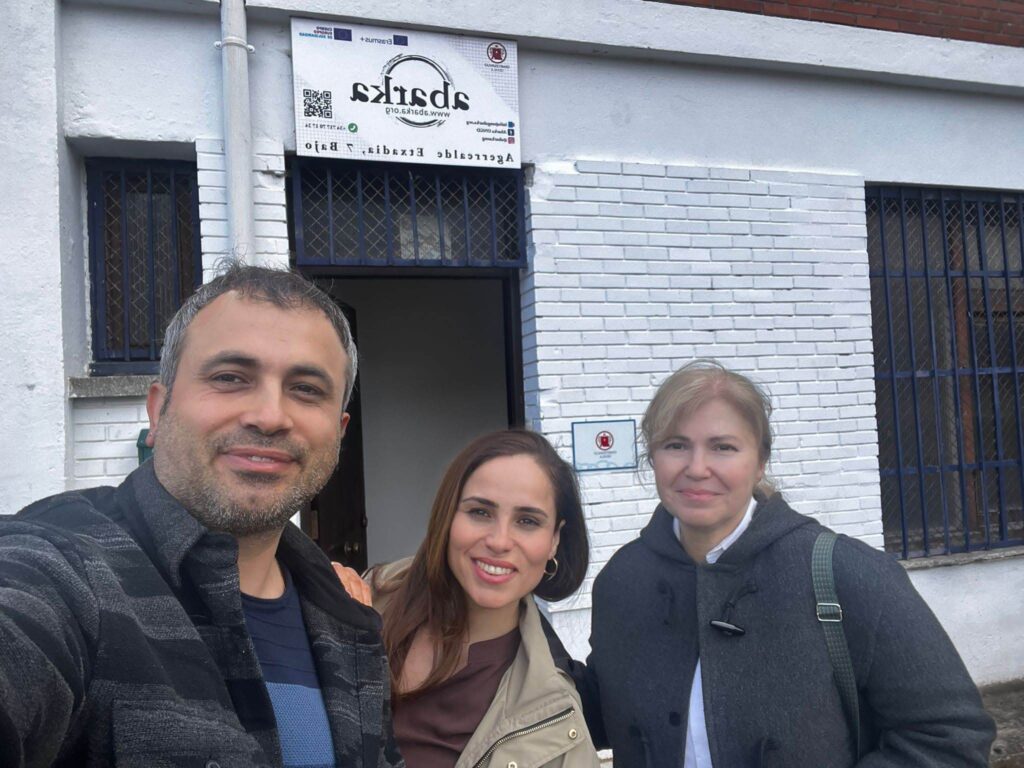
This article is part of the dissemination series for «Stronger Together» (STOG), an Erasmus+ KA210-ADU Small-Scale Partnership in Adult Education co-funded by the European Union, bringing together ABARKA (Spain) and Zembul Women’s Production Cooperative (Turkey) to promote women’s economic independence through education and intercultural exchange.