While preparing this text, we did not only want to share our experiences, but also reflect on them. We had the opportunity to compare the understanding of cooperativism in Europe and Turkey, and this led us to think more deeply.
In the Basque Country in Spain, the cooperative structures we observed are built on long-term experience, a strong culture of organization, and a systematic understanding of solidarity. Cooperatives are not only production units; they are also an essential part of education, social life, and local development.
In Turkey, especially in smaller cities like Tunceli where opportunities are limited, cooperatives are often emerging structures that struggle to survive and sustain themselves with limited resources.
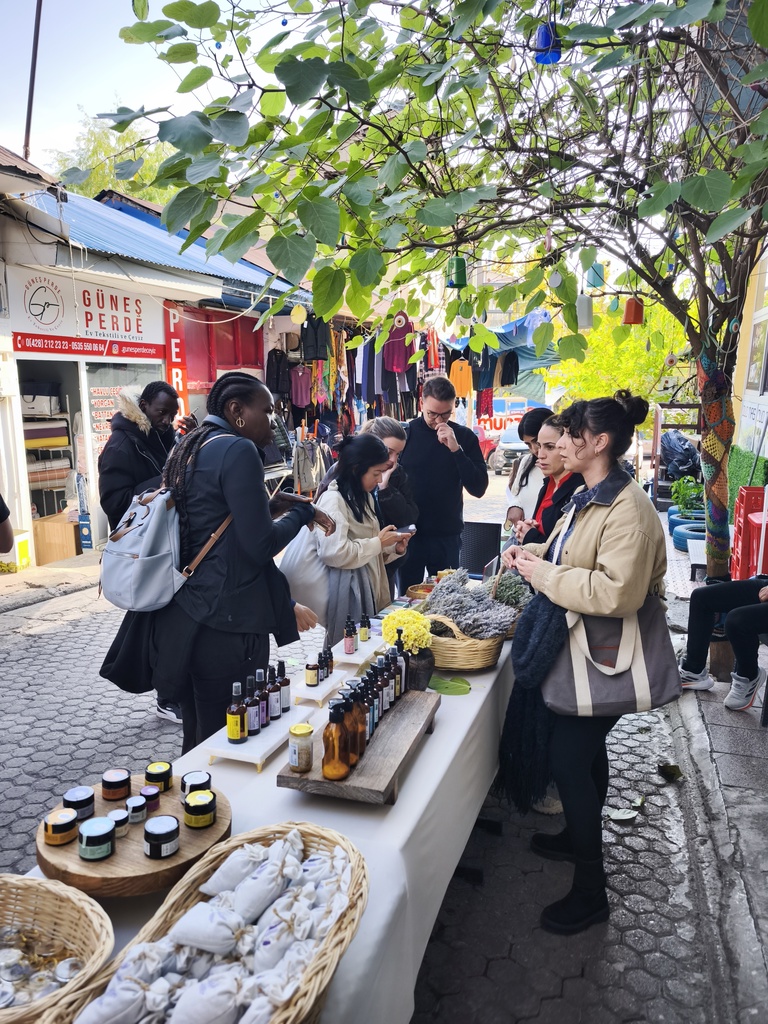
As Zembul Women’s Cooperative, we are part of this process. We produce, we work, we believe in solidarity—but at the same time, we struggle with structural challenges.
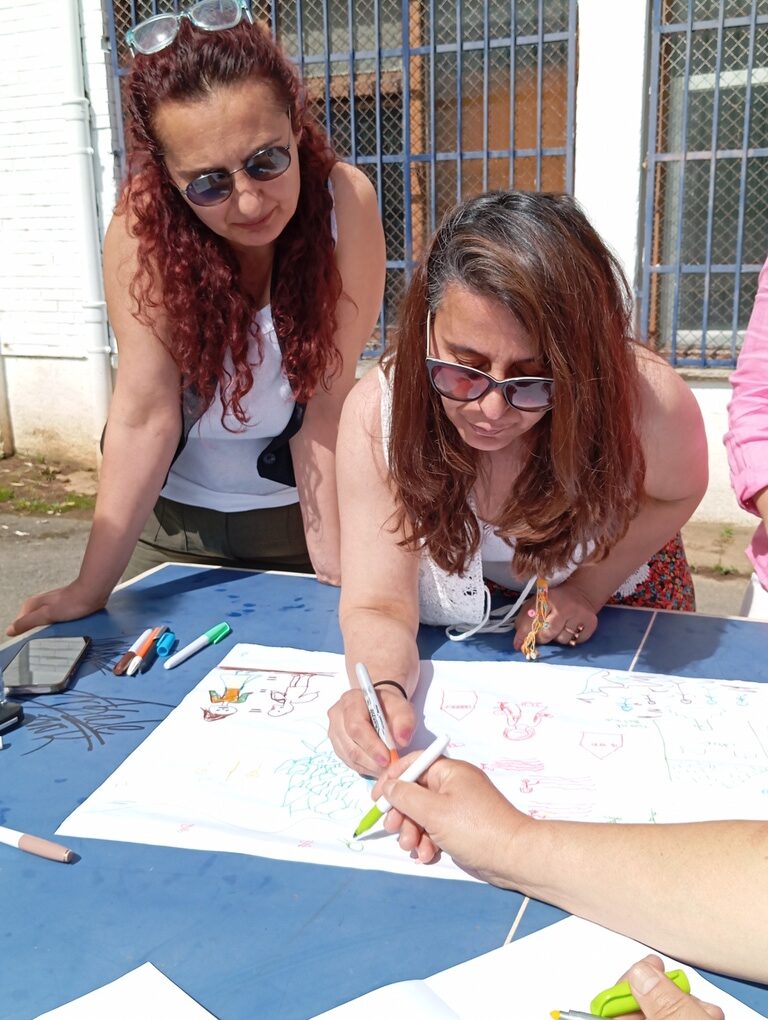
This encounter showed us something important: Cooperativism is not only an economic model, but also a way of life.
In the new world order, especially in the face of increasing inequalities, economic crises, and social fractures, the solidarity economy is becoming more and more important. Because we are now in a time where individual solutions are no longer enough.
The solidarity economy is based on sharing, producing together, growing stronger together, and healing together. Cooperatives are the most concrete expression of this understanding.
One of the most important things we observed in Europe was this: Cooperatives are not structures trying to stay outside the system; they have become strong alternatives within the system itself.
For us, however, cooperativism is still an area of struggle. But this is not a weakness—it is also a potential.
We now see more clearly that cooperatives in Turkey, especially women’s cooperatives, need to transform into structures that not only produce but also develop themselves, build networks, share knowledge, and become part of international solidarity.
Adapting to the new world order does not mean giving up our values. On the contrary, it means strengthening these values and making them more visible and sustainable.
Our greatest strength lies in our authenticity, our production, our culture of solidarity, and the labor of women. The strength of European cooperatives lies in their systematic organization, institutionalization, and strong networks.
When these two experiences come together, a much stronger model can emerge.
This is why we now believe: Cooperatives should not only connect locally, but also internationally. Experiences should be shared, joint production models should be developed, and solidarity must go beyond borders.
Because in the new world, those who are strong will not be those who stand alone, but those who can act together.
By Yildiz, Co-founder of ZEMBUL